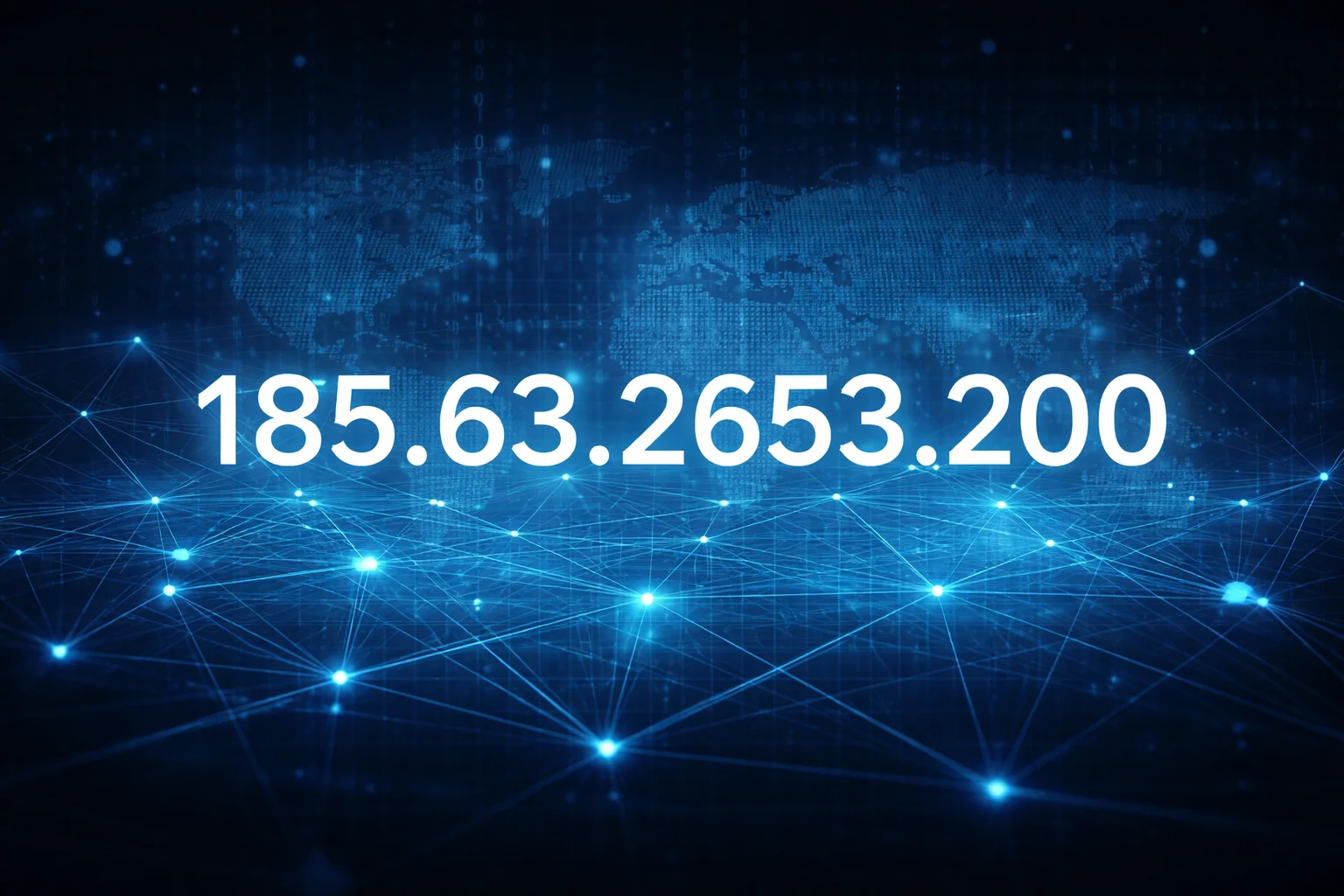
In the digital age, IP addresses have become more than just a string of numbers—they represent the gateway to networks, servers, and online interactions. One such address that has drawn attention is 185.63.2653.200. While it may seem like just another set of digits, this IP has various technical, practical, and security-related implications that make understanding it worthwhile.
What Is 185.63.2653.200?
At its core, 185.63.2653.200 is an IP address, a numerical label assigned to devices connected to a network. IP addresses act as identifiers, enabling devices to communicate effectively over the internet or private networks. They can reveal information about the location, service provider, and sometimes the type of device accessing or hosting online resources.
Although most users rarely consider the significance of an IP beyond connectivity issues, professionals in cybersecurity, web hosting, and IT infrastructure understand its value. An address like 185.63.2653.200 may be associated with specific servers or networks, making it essential for managing traffic, troubleshooting issues, or monitoring digital activity.
Why 185.63.2653.200 Matters
1. Network Identification and Management
Organizations often use IP addresses to monitor and control network traffic. Knowing the specifics of 185.63.2653.200 helps in mapping digital pathways, identifying potential threats, and ensuring smooth connectivity. For example, network admins can set access controls or restrictions based on IP ranges, preventing unauthorized usage.
2. Security and Threat Monitoring
IP addresses are a crucial part of cybersecurity. Malicious actors often use specific IPs to conduct phishing attacks, spam, or unauthorized data access. By tracking addresses like 185.63.2653.200, cybersecurity teams can implement firewall rules, blacklists, or real-time monitoring systems to protect sensitive data.
Personal Experience: Once, while managing a small e-commerce network, I noticed unusual login attempts originating from a specific IP. By blocking it and tracing its origin, I prevented a potential breach that could have compromised customer data.
How 185.63.2653.200 Impacts Network Operations
Imagine a medium-sized online business hosting its website on a cloud server. Visitors’ interactions are routed through multiple IP addresses, including 185.63.2653.200, which might be linked to a key server node. By monitoring this IP, the IT team can ensure that content delivery is fast, troubleshoot latency issues, and detect anomalies before they affect user experience.
In this way, understanding a single IP can directly impact website performance, customer satisfaction, and overall operational efficiency.
Comparing 185.63.2653.200 With Other IP Types
To put its significance in perspective, it helps to compare 185.63.2653.200 with other common types of IPs.
| Feature | 185.63.2653.200 | Typical Dynamic IPs | Private IPs (e.g., 192.168.x.x) |
|---|---|---|---|
| Usage | Server/Static allocation | General home or mobile use | Internal network devices |
| Stability | Usually stable | Changes frequently | Stable but isolated from internet |
| Security Monitoring | High priority | Moderate | Low (internal) |
| Geolocation Significance | Can indicate server region | Often vague | Not applicable |
| Best For | Hosting, network mapping | Everyday browsing | LAN setups |
This comparison highlights that 185.63.2653.200 is more likely used in a professional or organizational context, rather than as a casual consumer IP. Its static or server-oriented nature allows precise control, monitoring, and troubleshooting.
Key Considerations When Interacting With This IP
1. Accuracy of Geolocation
While IPs can indicate a general location, they are not always precise. The physical location of 185.63.2653.200 may correspond to a server hub rather than an individual’s residence.
2. Security Best Practices
If your network regularly communicates with this IP, ensure proper encryption, authentication, and firewall rules. Monitoring traffic and maintaining logs can mitigate risks.
3. Connectivity Reliability
A server associated with this IP can affect uptime and accessibility. Businesses relying on it should implement redundancy strategies or backup nodes to prevent disruption.
The Hidden Value
The true advantage of understanding an IP like 185.63.2653.200 lies in proactive network management. Instead of reacting to problems, IT teams can anticipate issues, optimize performance, and enforce security policies efficiently. This foresight not only preserves data integrity but also enhances digital operations in ways that many businesses overlook.
Also Read: SSIS 469: Features, Uses & Expert Insights
Conclusion
IP addresses are more than just numbers—they are digital identities that carry operational, security, and logistical weight. 185.63.2653.200, while seemingly ordinary, can play a critical role in server management, cybersecurity, and online efficiency. Whether you’re a small business owner, IT professional, or cybersecurity enthusiast, understanding this IP equips you with insights that improve decision-making and safeguard digital assets.
By monitoring, analyzing, and integrating such IPs into broader network strategies, organizations can create a safer, faster, and more reliable online experience for users.
FAQs
Q1: Can I trace the exact location of 185.63.2653.200?
A: You can approximate the location, usually indicating the server’s city or region, but exact physical location may not be accurate due to VPNs, proxies, or cloud hosting.
Q2: Is 185.63.2653.200 safe to connect to?
A: Generally, yes, if it belongs to a trusted server or service. Always maintain security measures such as firewalls and encrypted connections when interacting with unknown IPs.
Q3: How does this IP differ from my home dynamic IP?
A: Unlike dynamic IPs that change frequently, 185.63.2653.200 is typically static, making it more stable for hosting servers or professional network setups.
Q4: Can monitoring this IP improve my website performance?
A: Yes, tracking server IPs can help detect latency, optimize routing, and ensure reliable content delivery, which enhances user experience.
Q5: Why is understanding IP addresses important for businesses?
A: IP insights help prevent security threats, optimize network performance, and manage access controls efficiently—crucial factors in today’s online-driven operations.