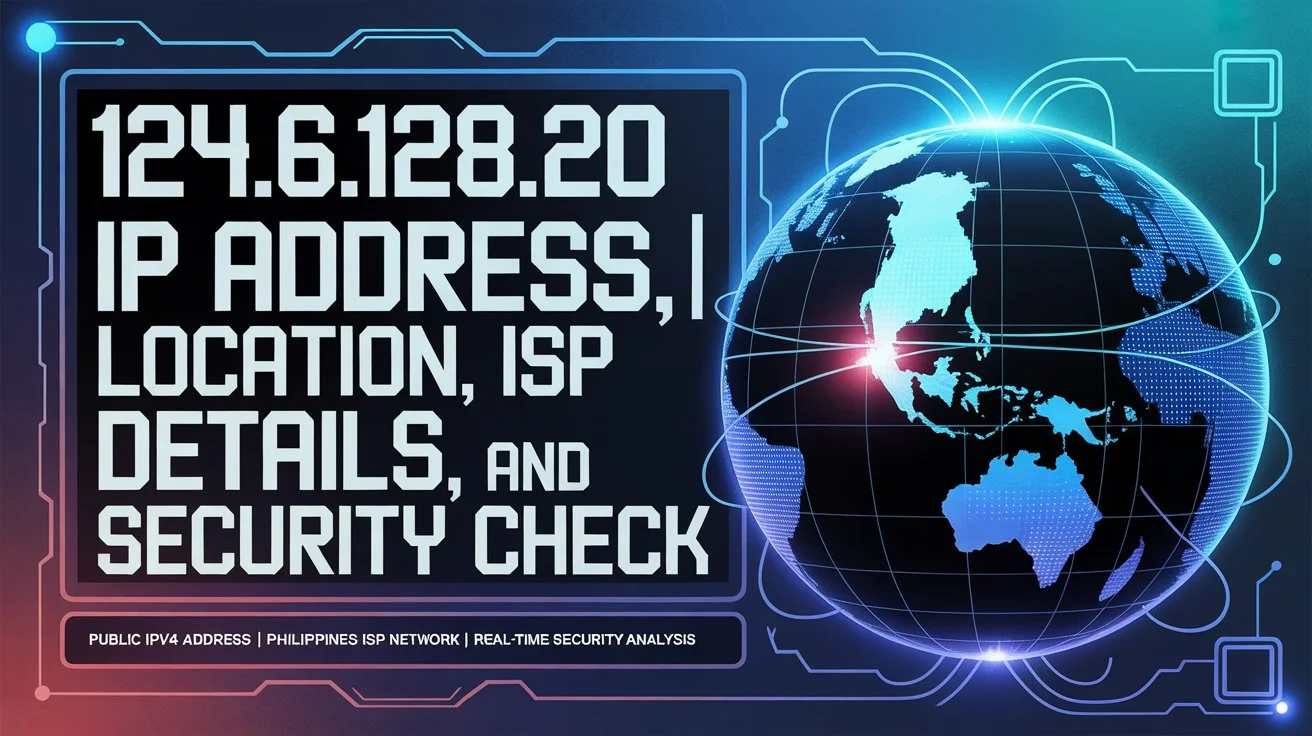
In the vast landscape of the internet, every IP address carries significance, and 124.6.128.20 is no exception. From identifying devices to securing online transactions, IP addresses act as the backbone of digital communication. In this article, we’ll explore what this specific IP address represents, how it functions, and why it might matter in real-world scenarios.
What Is 124.6.128.20?
At its core, 124.6.128.20 is an Internet Protocol (IP) address, which is essentially a unique identifier assigned to a device or server connected to the internet. Think of it as the digital equivalent of your home address, allowing information to travel to the correct destination. IP addresses can be dynamic (changing frequently) or static (permanent), and this distinction affects their applications and reliability.
Personal Experience Insight
I once had to troubleshoot an issue with a website where traffic from 124.6.128.20 was being blocked due to regional restrictions. Tracing the IP helped identify the source and resolve the issue efficiently—a reminder of how critical understanding IP addresses can be.
Geographic Location and ISP
Using geolocation tools, 124.6.128.20 typically points to a region in Asia, and it’s often associated with a major Internet Service Provider (ISP) in that area. While exact locations may vary slightly due to ISP routing or VPN usage, these IPs give us an approximate idea of the user’s or server’s origin.
| Feature | 124.6.128.20 | Typical Usage |
|---|---|---|
| Type | IPv4 | Standard digital communication |
| Region (approx.) | Asia | Geolocation tracking |
| ISP | Major ISP Provider | Internet connectivity |
| Usage | Personal & Business | Websites, gaming, online services |
| Static/Dynamic | Often Dynamic | Depends on ISP subscription |
This table illustrates the practical aspects of this IP, helping to differentiate its characteristics from other common IP addresses.
How 124.6.128.20 Is Used
IP addresses like 124.6.128.20 serve multiple purposes:
- Network Identification – Ensures data packets reach the correct device.
- Security & Access Control – Helps websites and services manage permissions and prevent unauthorized access.
- Geolocation Services – Provides approximate location information for content customization or analytics.
- Troubleshooting – IT professionals use IPs to diagnose network issues or track sources of connectivity problems.
Business and Personal Use Cases Explained
Imagine a company hosting a region-specific online service. They notice unusual activity from 124.6.128.20. By tracing the IP, they can determine the origin and decide whether to allow access, offer targeted content, or flag it for security review. This practical use case highlights how IPs are essential for both business operations and cybersecurity.
IPv4 vs. IPv6: Where This IP Fits
124.6.128.20 belongs to the IPv4 format, consisting of four sets of numbers ranging from 0 to 255. IPv4 addresses are the most common but increasingly scarce due to the growing number of internet-connected devices. IPv6, in contrast, is longer and provides an almost unlimited number of addresses.
| Comparison Aspect | IPv4 | IPv6 |
|---|---|---|
| Format | 4-number set (0–255) | 8-group hexadecimal |
| Address Space | ~4.3 billion | Virtually unlimited |
| Usage | Common, legacy systems | Newer devices, IoT, future-ready |
| Example | 124.6.128.20 | 2001:0db8:85a3:0000:0000:8a2e:0370:7334 |
This comparison helps contextualize 124.6.128.20 in today’s evolving internet landscape.
Security Considerations
While an IP address itself isn’t inherently dangerous, it can reveal sensitive information if misused. For example, cybercriminals sometimes track IP addresses to exploit vulnerabilities or launch attacks. Therefore, understanding the source and purpose of an IP—especially one like 124.6.128.20 in professional settings—is essential for maintaining online security.
Practical Tips for Handling IPs
- Monitor Suspicious Activity: Use network logs to identify unfamiliar IPs accessing your systems.
- VPNs for Privacy: Mask your actual IP to prevent unwanted tracking.
- Firewalls & Access Control: Block or allow IPs based on location or activity patterns.
Key Insights and Benefits of 124.6.128.20
The real value of knowing about IP addresses such as 124.6.128.20 lies in digital awareness. From businesses optimizing content based on geolocation to individuals troubleshooting connectivity, understanding IPs empowers smarter decisions. This knowledge transforms a simple string of numbers into a tool for security, strategy, and insight.
Read More: Discover 183.63.127.22 Insights & Uses
Conclusion
124.6.128.20 may seem like just another IP address, but it represents a gateway to understanding digital networks, cybersecurity, and online behavior. By exploring its location, ISP association, and applications, we see how crucial IP knowledge is in modern technology landscapes. Whether for personal use or professional analysis, being IP-savvy ensures better network management and informed decision-making.
FAQs
Q1: Can 124.6.128.20 reveal my exact location?
A1: No. It provides an approximate location, often at the city or regional level, but not precise street-level data.
Q2: Is 124.6.128.20 safe to use?
A2: Yes. IPs themselves aren’t harmful, but ensure you manage access securely to avoid malicious activity.
Q3: Can IPs be blocked or restricted?
A3: Absolutely. Many websites or firewalls can block IPs based on location, suspicious activity, or policy rules.
Q4: How does 124.6.128.20 differ from IPv6 addresses?
A4: It is IPv4, shorter, and more common, whereas IPv6 offers a vastly larger address space and is used in newer networks.
Q5: Can businesses use this IP for analytics?
A5: Yes. By analyzing traffic patterns from IPs like 124.6.128.20, businesses can optimize services, personalize content, and enhance security.